

· 4 min read
By Syed Shariq, Co-founder & CEO of Estric AI · Editorial policy
Running a salon front desk without a receptionist
Stylists can’t answer mid-cut, and every rung-out call is a booking somewhere else. How small salons cover the phone without hiring for the desk.
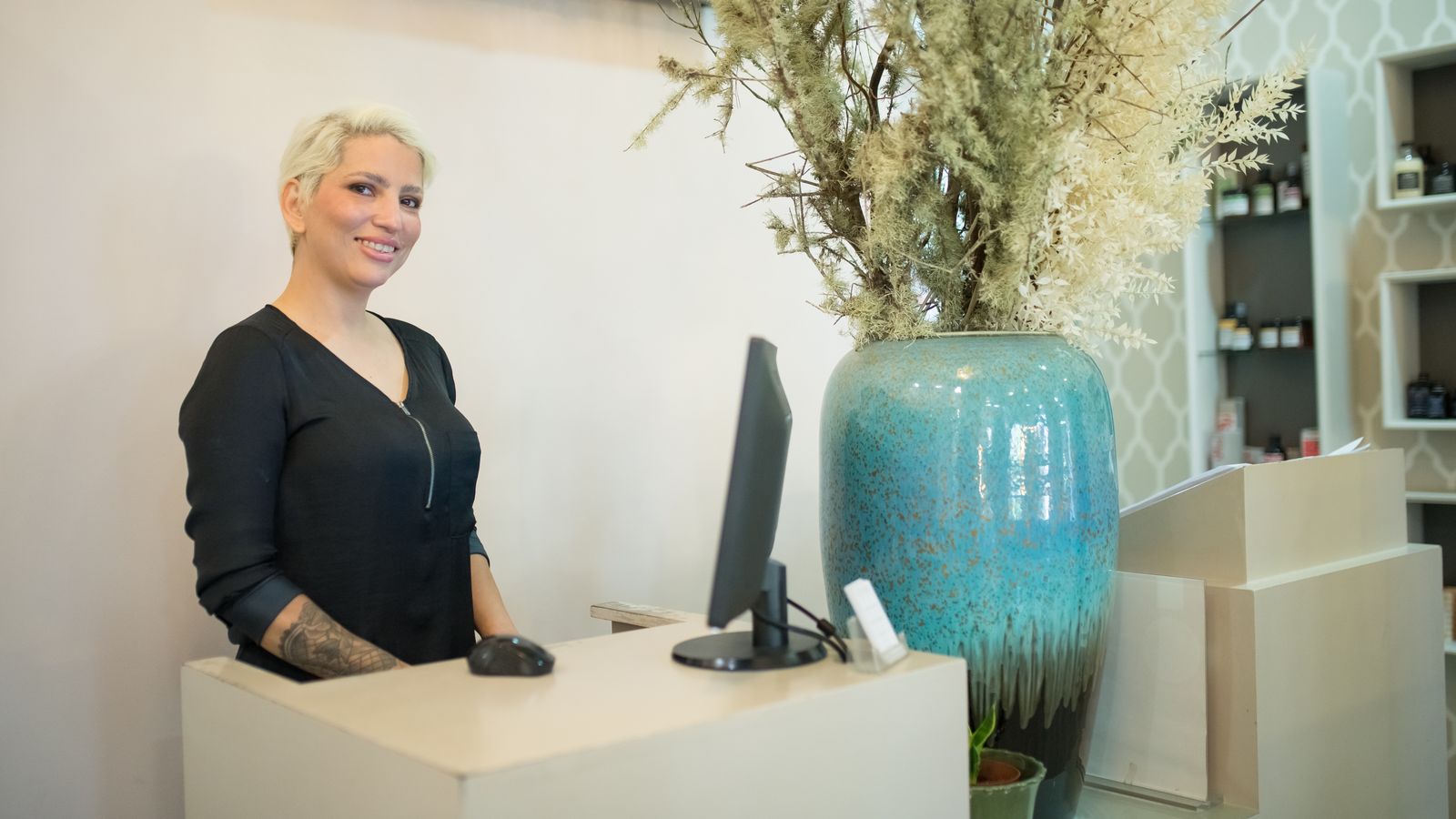
Picture the moment every salon owner knows: foils half-done, colour developing on one client, another in the chair, and the phone starts ringing. Nobody’s hands are free, nobody’s hands are clean, and the ringing is stressing out everyone including the clients. So it rings out — and somewhere across town, another salon just picked up a booking that should have been yours.
Big salons solve this with a receptionist. For a two-to-five-chair salon, the maths rarely works: a front-desk wage is one of the largest costs a small salon can take on, and for long stretches of the day that person is standing at a quiet desk. Most small salons choose the phone-chaos option instead, and quietly pay for it in missed bookings.
Why the salon phone is uniquely hard
A tradesperson can sometimes step away to take a call. A stylist mid-cut genuinely cannot — not without gloves off, client abandoned, and scissors down at exactly the wrong moment. Salon work is continuous, hands-on, and timed to chemistry. The phone always rings during it.
Salon calls also cluster at the worst times: lunchtime, when clients ring during their own break and every chair is full, and evenings, when people plan their week — and the salon is closed. The hours your clients most want to book are precisely the hours nobody can answer.
Rebooking is where the margin lives
A salon doesn’t run on new clients; it runs on regulars who come back every five to eight weeks. Which means the routine call — “can I get in with Mel on Thursday?” — is the single most valuable call your business receives. Miss it and one of two things happens: the client drifts to a salon that answered, or the visit simply slips a few weeks. Even the loyal ones who wait end up coming eleven times a year instead of thirteen, and you never see the loss because no one wrote it down.
The other high-stakes call is the cancellation. A client ringing to cancel is doing you a favour — that slot can be refilled if you know about it in time. If the call rings out, some won’t bother trying again. They just don’t show, and the chair sits empty for an hour you’d already counted on.
The quiet power of an SMS confirmation
A booking made by voice alone lives in the client’s memory, and memory is a poor booking system. A booking confirmed by SMS lives in their pocket: the day, the time, in writing, easy to check and hard to honestly forget. It also gives the client an obvious way to act early when life intervenes, instead of defaulting to silence and a no-show.
You don’t need studies to see the logic. Think about your own behaviour: an appointment you have in writing is one you plan around; an appointment you vaguely agreed to on the phone last Tuesday is one you discover in your memory at the wrong moment. Every booking should end with a confirmation text — whoever, or whatever, takes the call.
A front desk that doesn’t take a wage
This is where an AI front desk earns its keep in a salon. Estric AI answers your existing salon number 24/7 in a natural voice, answers questions from your own price list and policies — services, prices, hours — books the appointment during the call, and sends the SMS confirmation automatically. Callers who don’t book are saved as leads with a name, number, and what they wanted, every call is recorded and transcribed in one dashboard, and anything unusual gets passed to a human. You even choose the AI model and the voice provider, so you’re not locked into anyone’s stack. Plans start at $99 a month — a fraction of a single shift at the desk.
The goal isn’t to replace the warmth of your salon; that happens in the chair. The goal is to make sure everyone who wants to sit in that chair actually gets booked into it.
Put Estric AI on your phone
Estric AI answers every call, books the appointment, and texts the customer back, 24/7, on the number you already have.
Get started