

· 6 min read
By Syed Shariq, Co-founder & CEO of Estric AI · Editorial policy
AI receptionists for dental offices: a practical guide
Why dental front desks miss new-patient calls, and how an AI receptionist handles health-fund questions, bookings, recalls and no-shows.
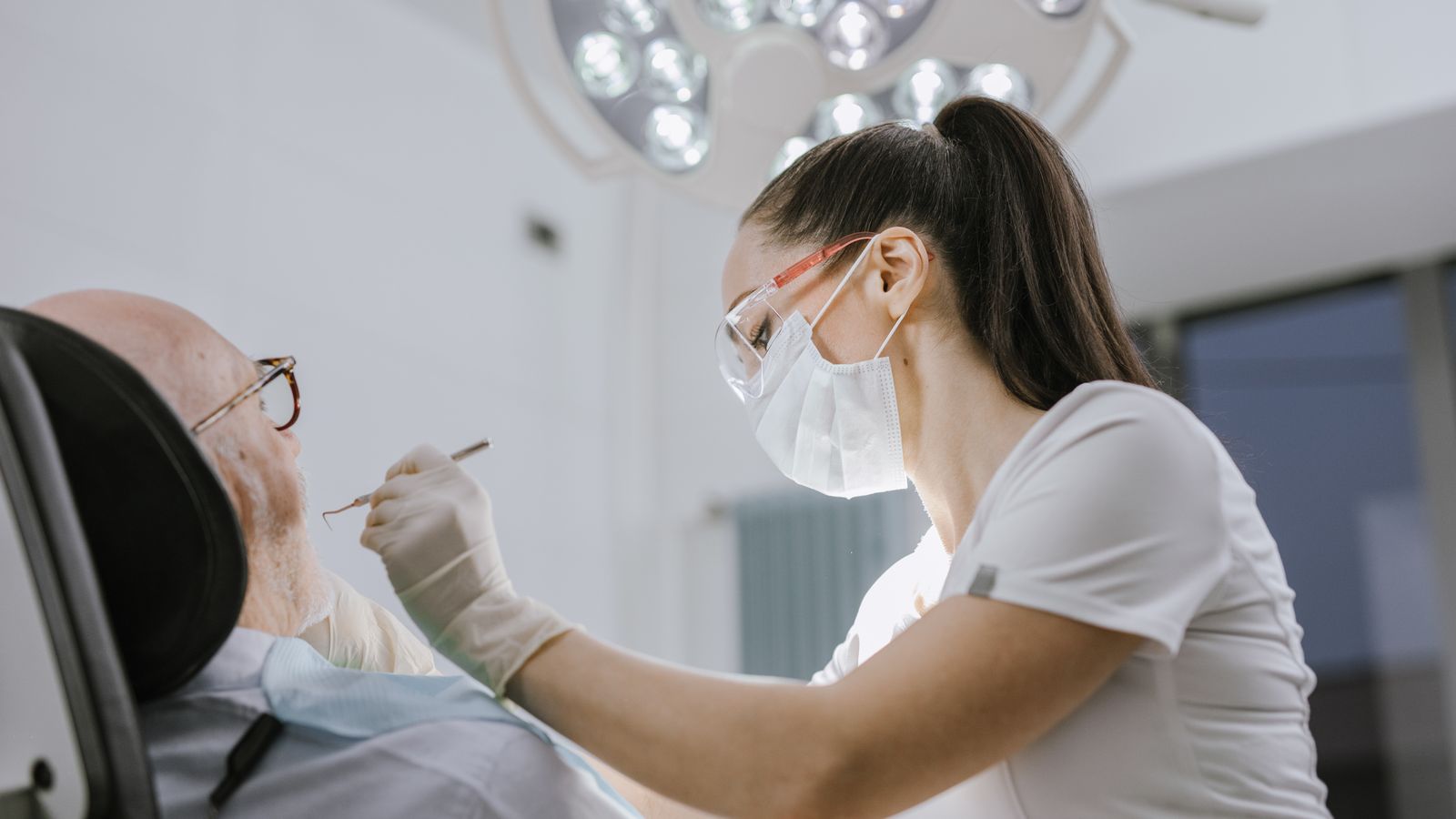
Watch a dental front desk for an hour and you’ll see the problem. The phone rings while a patient is paying, while another is checking in, while the coordinator is on hold with a health fund about someone else’s claim. Whoever is calling gets the choice every practice dreads: ring out, or hold while the person in front of the desk waits. Both options cost you.
This is not a staffing failure. It’s arithmetic. One or two people cannot simultaneously serve the patient in the room and the patient on the phone, and practices reasonably prioritise the person standing there. The phone loses, quietly, every day.
The new-patient call is the expensive one
Industry surveys of dental practices commonly put the share of inbound calls that go unanswered somewhere around one in five, and higher during lunch and after close. Whatever the exact figure at your practice, the callers you miss are disproportionately new patients, because existing patients will leave a message or call back. A new patient with a toothache calls the next practice on their search results.
Do the maths on what that caller is worth. A first visit might be an exam, scale and clean. But a retained patient is years of recalls, the occasional filling or crown, and often a family that follows them. If a new patient is conservatively worth a few thousand dollars over their time with the practice, a front desk that misses even a couple of those calls a week is leaking more than most practices spend on all their software combined.
What dental callers actually ask
Dental phone traffic is repetitive in a useful way. Do you take my health fund, and can you claim on the spot? What’s the gap on a check-up and clean? Are you taking new patients? Do you see kids? Can I get in this week, and do you have anything after 5pm? I have a broken tooth, how soon can someone see me?
None of these require clinical judgement. They require accurate practice information delivered instantly, which is exactly what an AI receptionist is good at. Loaded with your fund arrangements, your fees for standard items, your hours and your new-patient policy, it answers these questions the same way at 8am and 8pm, then does the part that matters: offers a time and books the appointment during the call, with an SMS confirmation before the caller hangs up.
The calls that do need a human, a patient in real pain, a complaint, a complex treatment question, get escalated to your team with a transcript rather than answered by guesswork. The right behaviour for an AI in a clinical setting is to know its lane.
One more pattern worth naming: in many suburbs a meaningful share of patients are more comfortable asking about gap fees in Mandarin, Vietnamese, or Arabic than in English. A receptionist that detects the caller’s language and answers in it, on the phone and in web chat, quietly removes a barrier your front desk was never staffed to remove.
Recalls and no-shows
Dentistry runs on the recall list, and the recall list runs on follow-through: rebooking the six-month visit, confirming it as the date approaches, and catching cancellations early enough to refill the chair. All of it is systematic, time-sensitive work that busy humans do inconsistently, and every skipped confirmation shows up later as an empty chair that still cost you a dentist’s hour.
Booking confirmations sent in writing at the moment of booking, plus a reminder before the visit with an easy way to reply, cut into no-shows because most no-shows are memory failures rather than avoidance. We’ve written a full playbook on SMS confirmations that actually get read; the short version is that consistency beats cleverness, and software is better at consistency than any front desk having a busy day.
Privacy, handled sensibly
Practices are right to be careful here, so be clear about what an AI receptionist does and doesn’t need. It doesn’t need access to clinical records, treatment notes, or health histories, and it shouldn’t have it. Answering the phone well requires practice information (services, fees, funds, hours) and appointment details (name, number, time). That’s it.
Ask any vendor, us included, the direct questions: what caller data is stored, where, and who can see it? You should get plain answers. And because every call is recorded and transcribed into one dashboard, you get something paper message pads never gave you: an audit trail of exactly what was said to every patient who rang.
What it looks like in practice
A Tuesday: at 7:40am a mum calls about a chipped tooth before school; the AI answers, flags it as urgent, and your coordinator sees it before doors open. Through the morning it absorbs the do-you-take-my-fund calls while your desk handles the room. At lunch, when call volume peaks and coverage dips, nothing rings out. At 9pm someone finally deals with the check-up they’ve been putting off and books it on the spot. Your team arrives to a dashboard of bookings, leads, and transcripts instead of a voicemail light.
Before you change anything, get your baseline. Pull a month of call logs from your phone provider and count three things: total inbound calls, how many rang out, and how many arrived outside opening hours. Practices that do this exercise are usually surprised in the wrong direction, and the numbers turn a vague sense of “we should fix the phones” into a business case with a dollar figure on it.
Then the fastest way to judge whether this would work for your practice is to interview it. We run a live dental demo with a full practice setup, funds, fees, hours and all. Call the dental demo and ask it the hardest questions your patients ask, then decide.
Put Estric AI on your phone
Estric AI answers every call, books the appointment, and texts the customer back, 24/7, on the number you already have.
Get started